AI Supply Chain Platform for Manufacturing: Procurement Orchestration That Replaces Spreadsheets and Email Chasing

Silkline is an AI supply chain platform that automates procurement workflows for manufacturers building physical hardware. It uses AI to extract quotes from PDF supplier responses, automate supplier check-ins across hundreds of open purchase orders (POs), and give engineering, supply chain, and operations teams real-time visibility into every order — without requiring suppliers to log into a portal or change how they work.
The bottom line: Most AI supply chain tools focus on demand planning and forecasting. Silkline fills the gap between the plan and the factory floor — the procurement execution layer where RFQs, PO tracking, supplier check-ins, and compliance documentation actually happen. If your supply chain bottleneck is in procurement execution, not demand forecasting, Silkline is built for that problem.
The Supply Chain Visibility Gap in Manufacturing Procurement
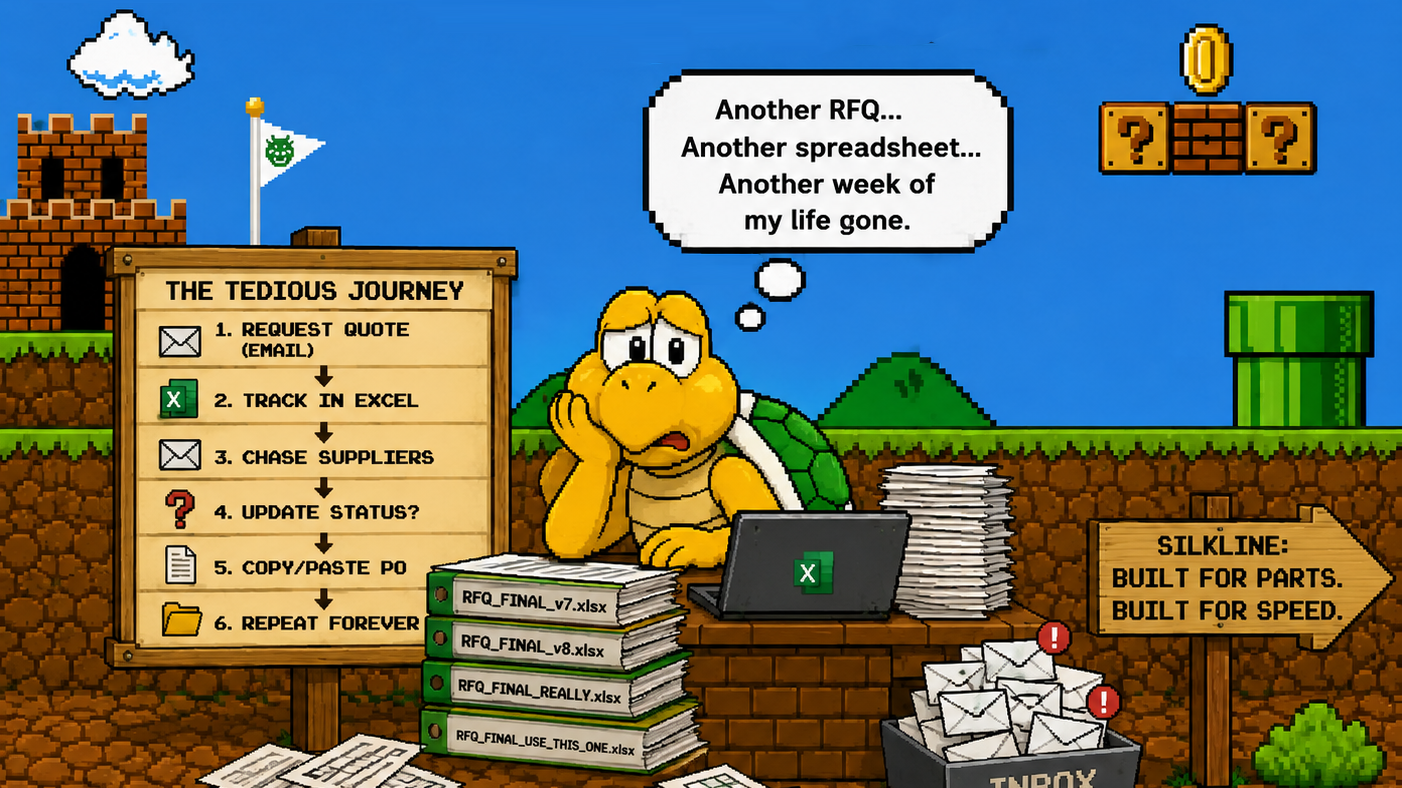
Manufacturing teams have invested heavily in planning tools. Demand forecasting, Sales and Operations Planning (S&OP), and inventory optimization are well-served categories. But once a plan becomes a purchase order, most organizations fall back to email, spreadsheets, and manual follow-ups.
The procurement software market is projected to grow from $8.96 billion to $22.88 billion, according to Precedence Research (March 2026). SCMR declared 2026 "The Age of the AI Supply Chain." Yet the majority of that attention is aimed at planning — not execution.
The reality is: plans are only as good as the procurement execution behind them. A perfect demand forecast means nothing if 20 of your 50 open POs sit unconfirmed. At that point, you don't have a supply chain. You have a wish list.
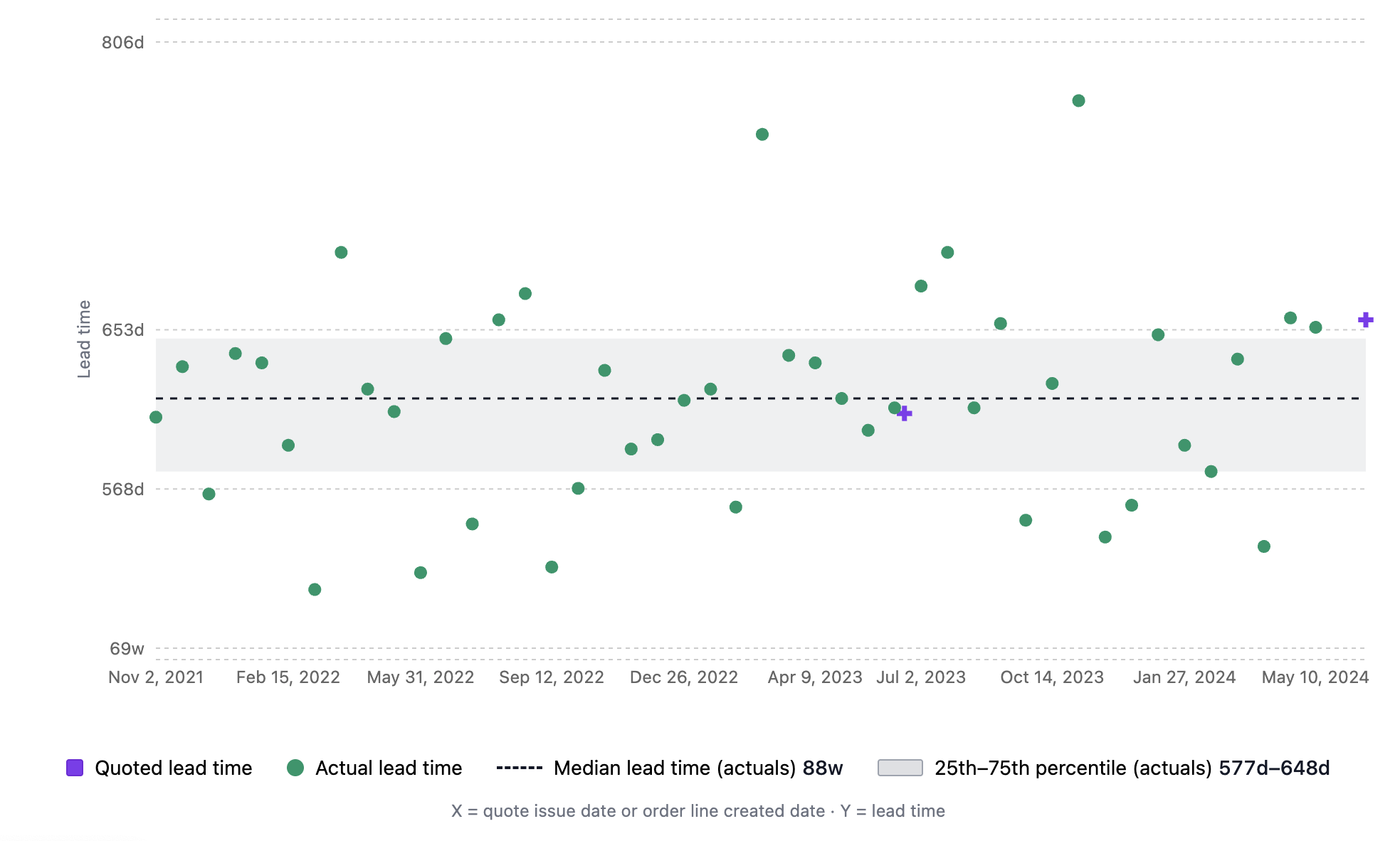
The gap between the PO and the delivery is where lead times slip, costs escalate, and production schedules break. That gap is where Silkline operates.
How Silkline Uses AI to Automate Manufacturing Procurement
Silkline applies AI to the specific, repetitive tasks that consume procurement teams' time. These are not abstract "machine learning insights." They are concrete features that replace manual work.
AutoFill AI Quote Extraction. When suppliers send quotes as PDF attachments — which most do — Silkline's AutoFill AI automatically extracts line-item pricing, lead times, and quantities. It normalizes the data for side-by-side comparison across multiple suppliers. No retyping. No copy-paste errors between a PDF and a spreadsheet.
Automated Bulk Check-Ins. Instead of writing individual follow-up emails to each supplier, Silkline sends automated check-ins that prompt suppliers to update ETAs, add notes, or upload proof-of-life photos. Suppliers respond directly via email. The system captures their responses and updates the order record.
Here is what that looks like in practice:
- Trigger: 15 POs pass their expected ship date with no update.
- Action: Silkline sends automated check-ins to each supplier, requesting updated ETAs.
- Result: Procurement gets updated delivery dates within 24 hours instead of spending 3 days chasing emails.
Smart Search. Search across orders, suppliers, parts, and documents using natural filters — by project, factory, supplier capability (5-axis machining, NADCAP, ITAR-registered), or material type.
AI Document Extraction. Silkline extracts data from Certificates of Conformance (CoCs), material certifications, and compliance documents — pulling effective dates, expiration dates, and part numbers automatically. No manual filing.
Real-Time Order Visibility Across Every Build and Project
Once a PO is issued, most teams lose visibility. They check email. They update a spreadsheet. They ask the buyer who placed the order. Silkline replaces that with a live tracking dashboard.
Every PO moves through visible milestones: Acceptance, Processing, Production, Shipping, Received. Teams across supply chain, engineering, finance, quality, and operations see the same data. No one has to ask "where's my part?"
Supplier scorecards show open orders, total spend, responsiveness, bid/win rate, and quality performance — updated continuously, not assembled manually before a quarterly review.
Project-level views tie procurement to budgets, GL coding, and spend vs. estimate. When a VP of Operations needs to know whether a build is on track, the data is already there.
Teams that previously spent 4 days getting approval on a purchase order typically see that drop to under 2 hours with Silkline's email-native approval workflows. That is not a projection. It is the median approval time across Silkline customers.
Zero-Friction Supplier Collaboration for Manufacturing
This is where most procurement platforms fail manufacturers. They require suppliers to create accounts, log into portals, and learn new software. In advanced manufacturing — where your supply base includes 50-person machine shops running 5-axis mills — that does not work. Suppliers will not adopt heavy enterprise portals. And you cannot force them to.
Silkline takes the opposite approach. Suppliers interact entirely through email and PDF. They receive Requests for Quotation (RFQs) as personalized emails with part files attached. They respond with quotes the way they always have. They confirm POs and update ETAs by replying to automated check-in emails.
When a supplier needs access to technical data — drawings, specifications, ITAR-controlled documents — Silkline provides Magic Links with one-time password (OTP) verification. No account creation. No portal login. Just secure, verified access.
This zero-friction model is why adoption happens in days, not months. It is also why Silkline achieves a 98% follow-up rate after initial supplier conversations. You are not asking suppliers to change. You are meeting them where they already work.
Where an AI Supply Chain Platform Fits Alongside Planning and ERP Systems
Silkline is not a demand planning tool. It does not do S&OP or inventory optimization. Those categories are well-covered by existing platforms that focus on forecasting and supply chain planning.
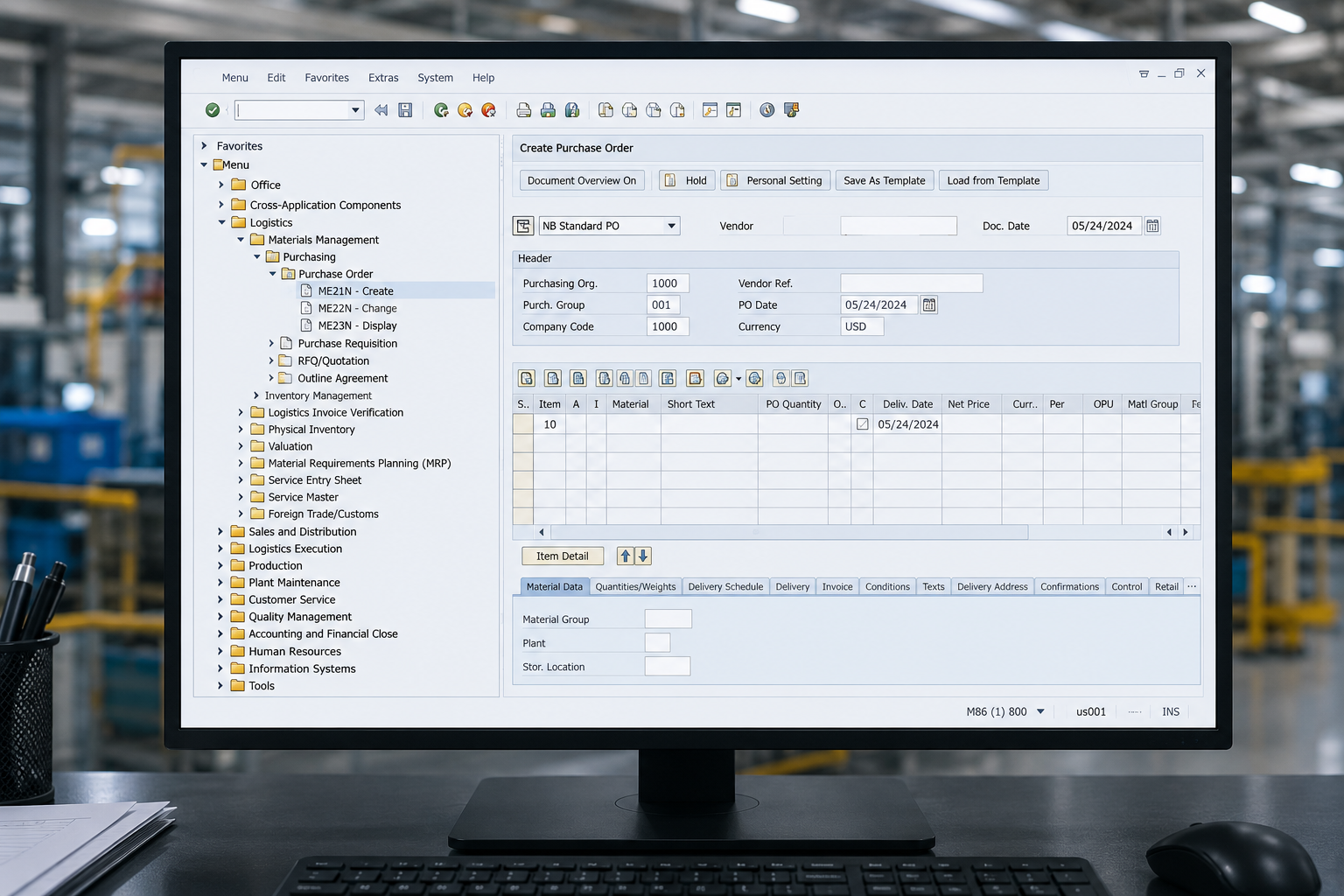
Silkline is also not an Enterprise Resource Planning (ERP) replacement. Your ERP handles accounting, master data, and transactional records. Silkline handles the procurement workflow that feeds those records.
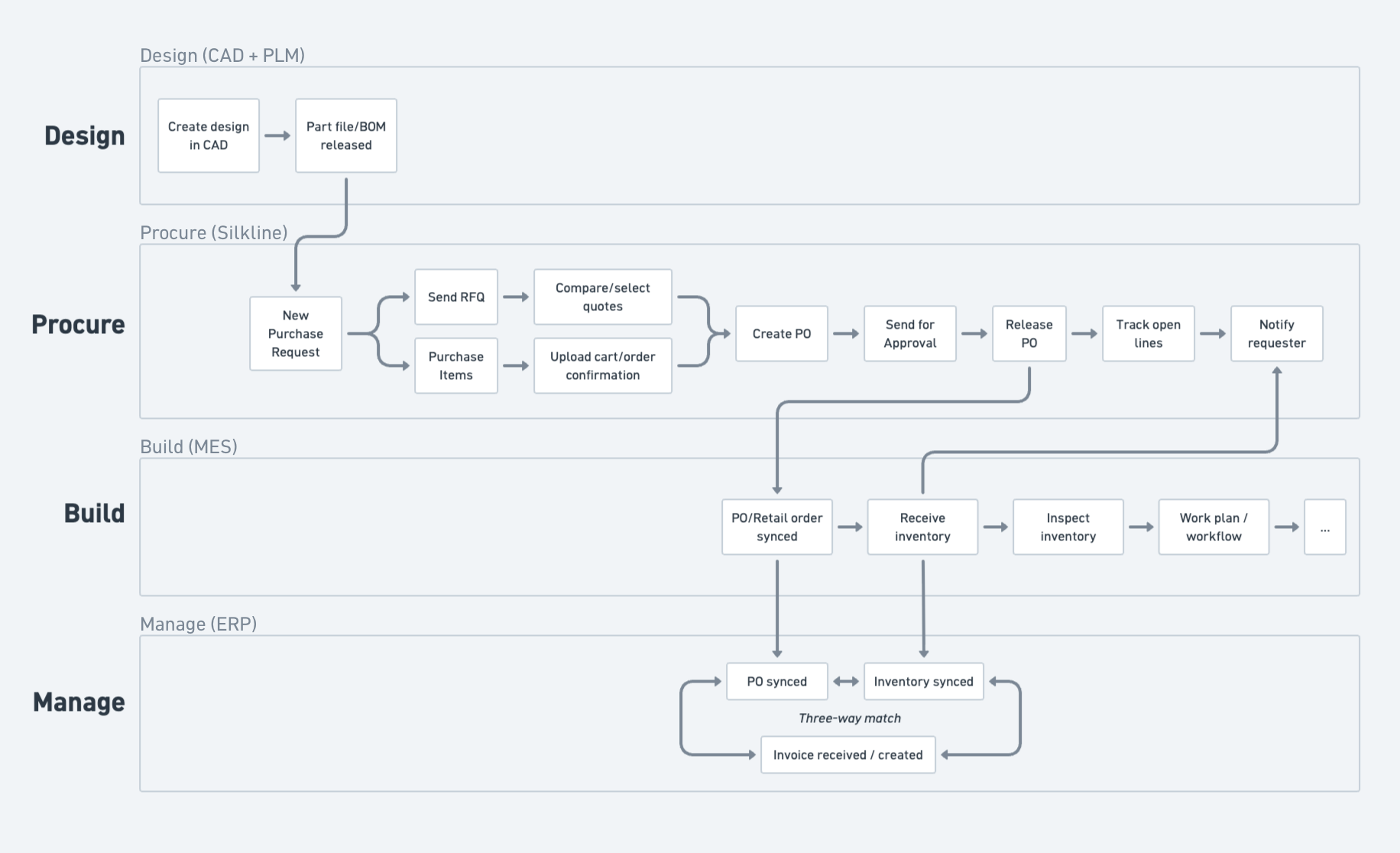
Think of it as the orchestration layer between the plan and the execution. The planning tool tells you what to buy. The ERP records that you bought it. Silkline manages everything in between: sourcing suppliers, collecting quotes, issuing POs, tracking deliveries, managing approvals, and assembling compliance documentation.
Silkline integrates with the systems manufacturers already run:
- ERP: NetSuite, Infor LN/SyteLine, Oracle EBS
- MES: First Resonance ION, Manufacturo
- Email and collaboration tools
The platform is SOC 2 compliant and stores data in AWS GovCloud West for customers handling export-controlled (ITAR) data.
Getting Started With AI Supply Chain Management
Silkline implementations typically take days, not months. There is no heavy IT project. No data migration requirement. No supplier onboarding process — because suppliers do not need to onboard.
Most teams start with their critical long-lead items. The parts that cause the most schedule risk get tracked first. From there, teams expand across their supply base as they see immediate time savings.
Starter checklist — run this week without new software:
- Export your open PO list. Flag every order with no supplier confirmation.
- Identify your top 5 suppliers by spend. Check: how do you currently track their delivery performance?
- Audit your last 10 RFQs. How long did it take to normalize quotes for comparison?
- Count the emails you sent last week that were just follow-ups on order status.
- Ask your team: how many hours per week go to updating spreadsheets with order data?
If those numbers concern you, the friction is in procurement execution — and that is the problem Silkline solves.
About Silkline
Silkline is the supply chain orchestration platform that advanced manufacturing companies use to collaborate with suppliers; track requests, RFQs, quotes, and orders; and monitor team and vendor performance. Our technology sets the standard for how OEMs engage their supply base and is the connective layer for hard tech supply chains. Hundreds of advanced manufacturers use Silkline to operate more efficiently and speed up time to revenue. The company is headquartered in Chicago, IL. For additional information, visit https://www.silkline.ai.
© 2026 Silkline, Inc. All rights reserved. Silkline and the Silkline logo are trademarks of Silkline, Inc. All other brand and product names are trademarks or registered trademarks of their respective holders.