Building the Modern Tech Stack for the Modern Hardware Company
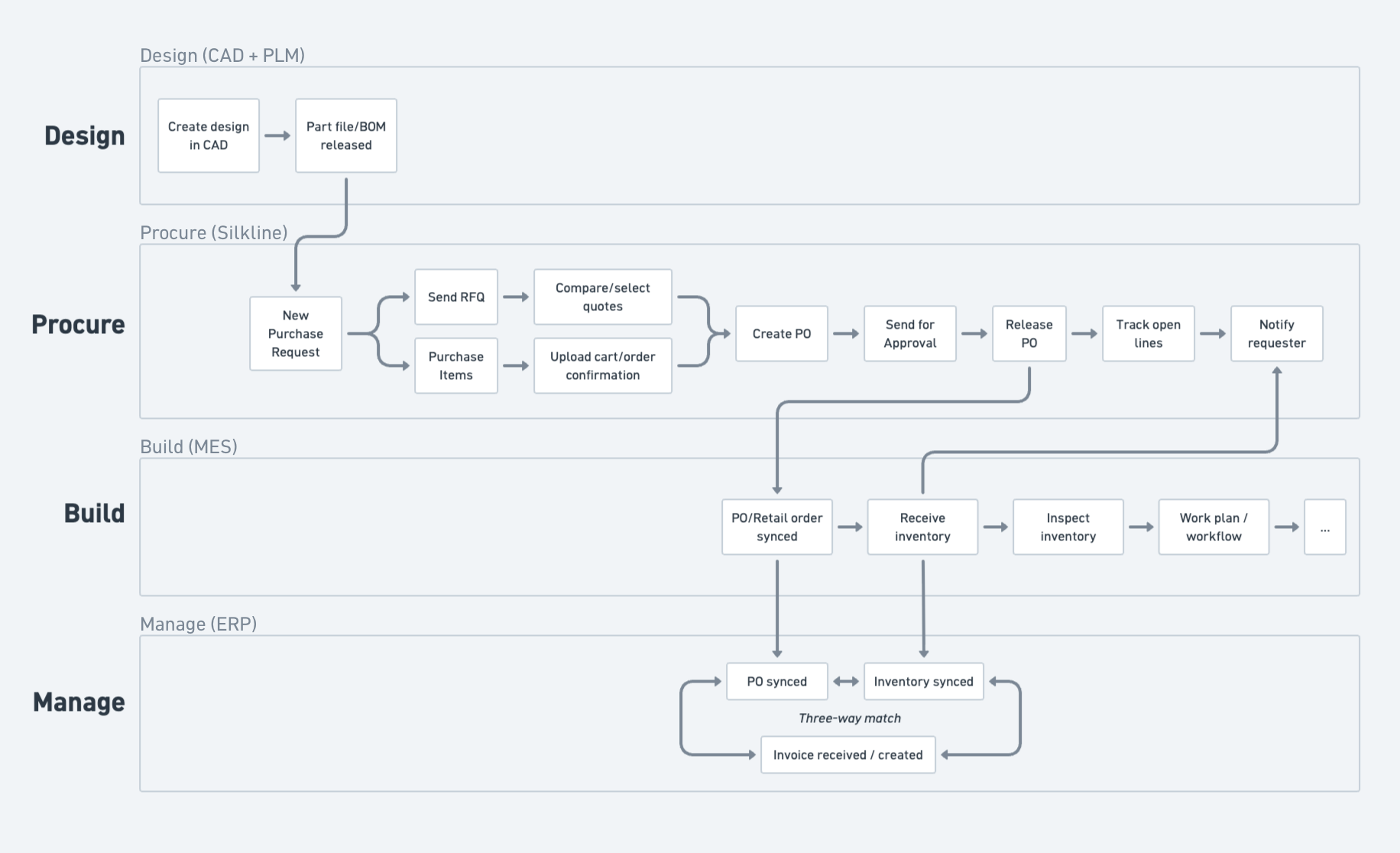
The one-system dream is a trap. A single ERP to run everything sounds clean, but for early-stage hardware teams it cements processes before they've been tested and burns budget you don't have. The modern stack is modular: a headless ERP for finance, best-in-class tools layered around it for production, BOMs, quality, and procurement. Sequence matters more than selection. This post walks through the order.
Why Stack-Building Stalls at Hardware Companies
The standard stack-building advice falls apart for hardware companies. Guides for software teams skip Bills of Materials (BOM) and Engineering Change Orders (ECO). They ignore lot traceability and supplier qualification. Guides from legacy manufacturers assume stable product lines with long lifecycles.
Modern hardware companies face neither situation. They iterate fast and ship complex assemblies. Regulatory demands like AS9100 or International Traffic in Arms Regulations (ITAR) add further pressure.
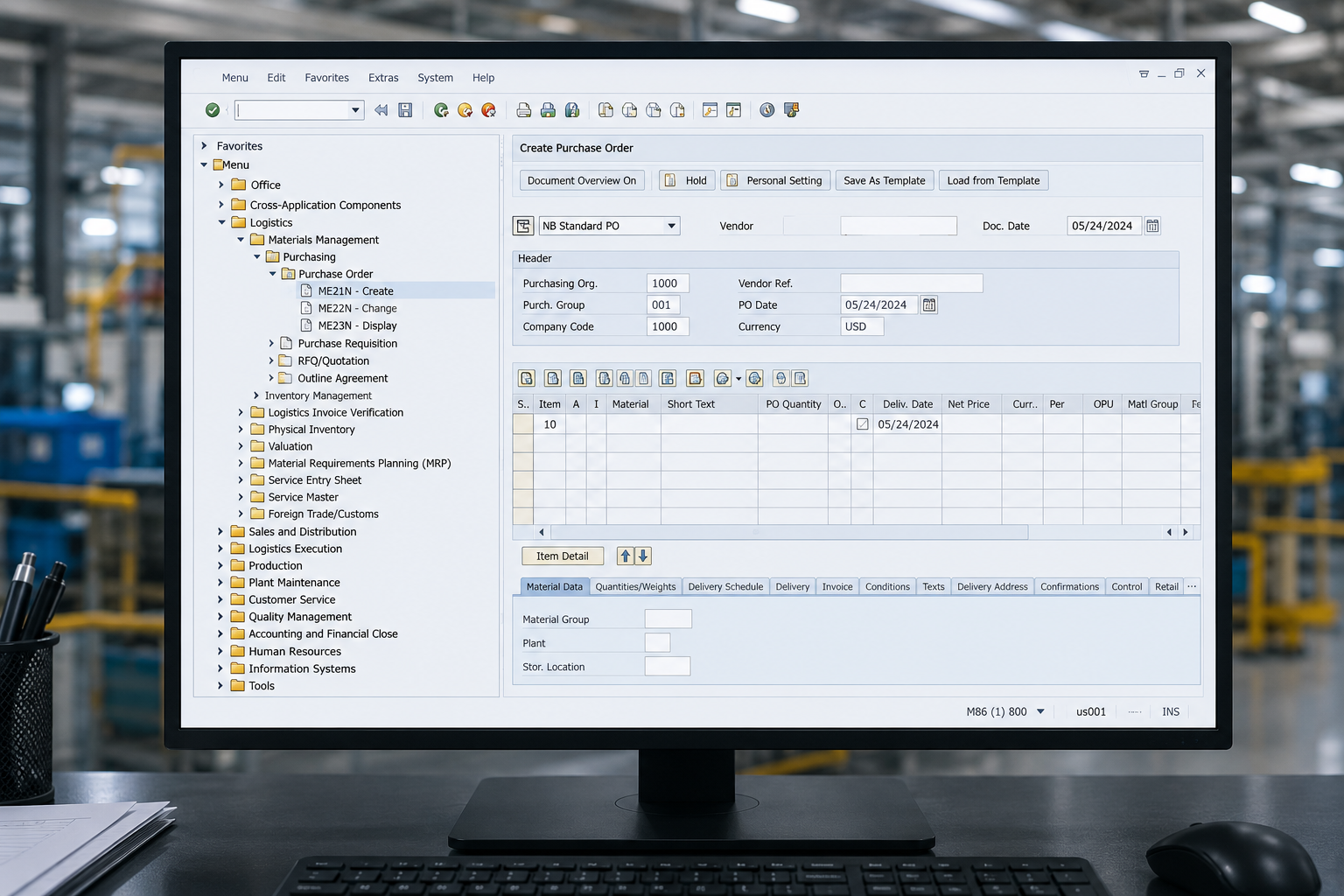
Then there's the Enterprise Resource Planning (ERP) trap. Teams look at what a larger peer uses and buy the same system. Enterprise ERPs from SAP or Oracle were built for steady-state, high-volume production. They assume stable BOMs and reliable demand forecasts. A company still iterating weekly doesn't have either. In practice, implementations at this scale typically run 12 to 24 months.
The Core Systems — and What They Actually Do
Manufacturing Execution System (MES)
What it does. MES manages work orders and tracks work-in-progress. It enforces quality checkpoints and logs traceability data. MES solves production execution. Financial planning belongs to ERP.
What happens if you get it too soon. Engineers and technicians don't use the MES because they're still figuring out procedures as they build.
Typical trigger. You've demonstrated viability with your first prototype and documented your work instructions. Now you need to execute them consistently across every unit.
What teams use. Manufacturo, First Resonance ION, and Boltline appear most frequently among modern hardware teams. These systems are cloud-native and Application Programming Interface (API)-first. Tulip offers ultimate configurability. Epsilon3 is best known for its digital work instructions.
What changes. As-built traceability becomes a query instead of an archeology project.
ERP and Accounting
What it does. ERP handles financials and reporting. Categorize by market fit, not by vendor size.
What happens if you get it too soon. You choose a system and spend time configuring it before your organization knows what they want.
Typical trigger. A single chart of accounts no longer cuts it, and you need to start capitalizing inventory instead of expensing it.
What teams use. Most early-stage hardware companies start with QuickBooks. It's cheap and fast to stand up. As complexity grows, teams frequently move to NetSuite. Finance teams favor it for GL reporting, inventory handling, and revenue recognition. Full-Suite Enterprise ERPs like SAP serve large manufacturers with global supply chains. Compliance-deep ERPs like IFS or Epicor target upper mid-market companies with sophisticated Material Requirements Planning (MRP) needs.
What changes. You get board-ready financials. Inventory sits on the balance sheet, gross margin is auditable, and month-end close drops from several weeks to under 5 days.
Product Lifecycle Management (PLM)
What it does. PLM manages BOMs and Computer-Aided Design (CAD) data. It tracks ECOs and revision history.
What happens if you get it too soon. Honestly, hard to do. The bigger risk is over-engineering the ECO workflow: adding approval gates and sign-offs before you have the engineering discipline to support them. The system slows iteration instead of protecting it.
Typical trigger. Your engineering team can't share one pizza.
What teams use. Teamcenter remains widely adopted across hardware companies. Arena is a widely adopted cloud-native alternative. Duro is gaining traction among smaller teams.
What changes. The BOM becomes a single source of truth. ECOs propagate same-day, and wrong-revision builds stop happening.
Quality Management System (QMS)
We're skipping this section for a reason. In aerospace, defense, and nuclear, quality is mission critical. Modern teams adopt MES and PLM platforms with quality natively built in, so CAPA, nonconformance, and audit trails live with the production records they reference.
Accounts Payable (AP) and Finance Automation
What it does. AP platforms automate invoice processing and bill payments. They handle expense management and spend controls.
Typical trigger. The day you start spending money. Platforms like Ramp offer free corporate card and bill pay solution.
What teams use. Ramp appears most frequently among modern hardware companies for spend management. Bill (formerly Bill.com) is also widely used for AP automation. Brex and Tipalti serve larger teams with specific payment remittance needs.
What changes. Finance stops chasing receipts. Spend is categorized at the source, invoices match to POs automatically, and month-end reconciliation becomes a review, not a rebuild.
The Procurement Maturity Ladder
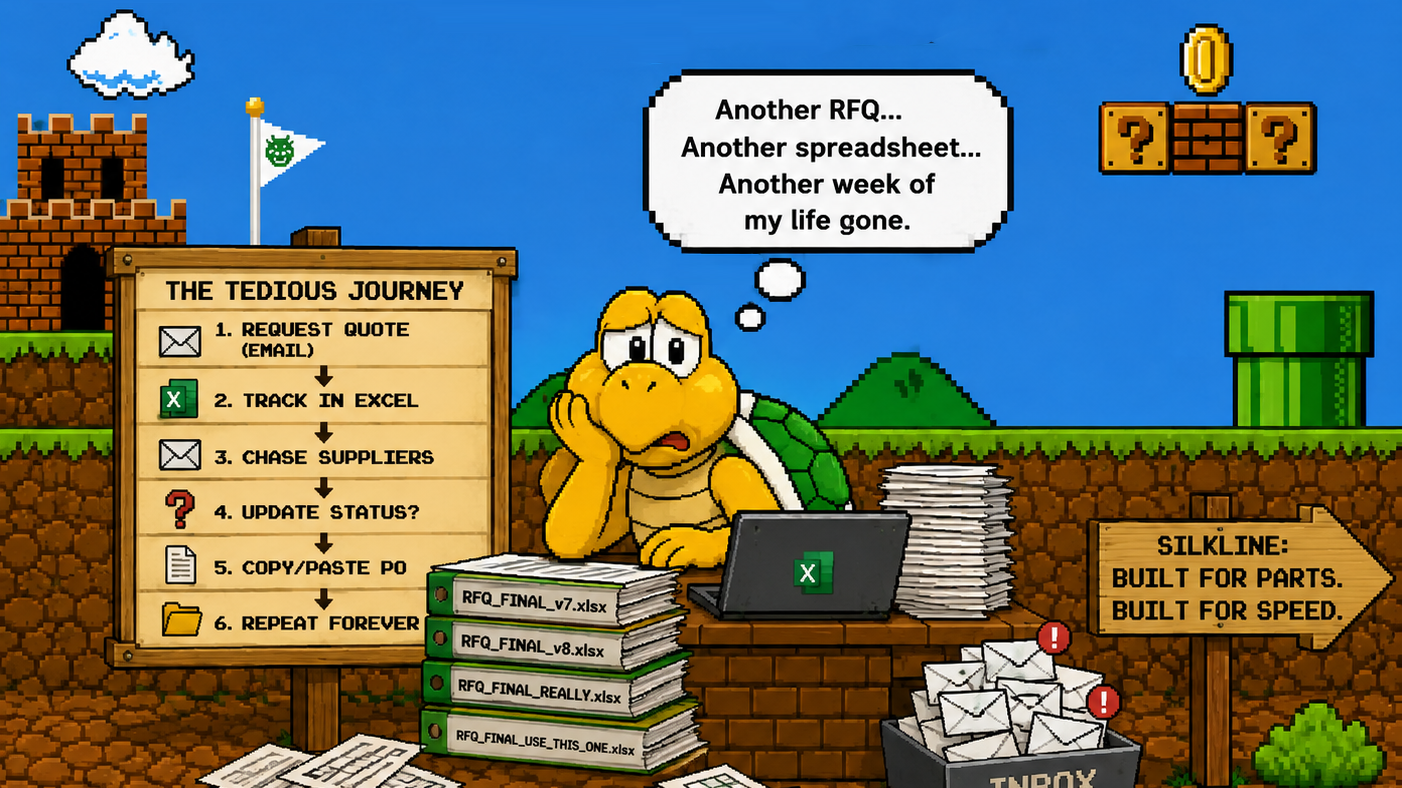
Most teams treat procurement as a late-stage concern. Even at low PO volume, procurement tooling keeps builds on schedule.
Getting Started
Garage. You're a blip on your suppliers' radar. The core need is developing relationships and getting parts quickly. Any tool that can help you get parts in quickly and avoid buying the wrong parts is worth its weight in gold.
Early Prototype. Multiple engineers are now sourcing parts independently as the team grows. A missed PO confirmation on a long-lead item delays the entire build. Procurement becomes a coordination layer at this stage. Procurement tools give time back to engineering and let them run their own procurement longer.
From Compliance to Scale
Late Prototype / Early Production. Certifications like AS9100 or Nuclear Quality Assurance (NQA-1) are on your radar, which means auditable records for every PO. Quality clauses, pedigree tracking, and Certificates of Conformance (CoC) / First Article Inspection (FAI) become contractual requirements. For defense work, Federal Acquisition Regulation (FAR) and Defense Federal Acquisition Regulation Supplement (DFARS) compliance applies.
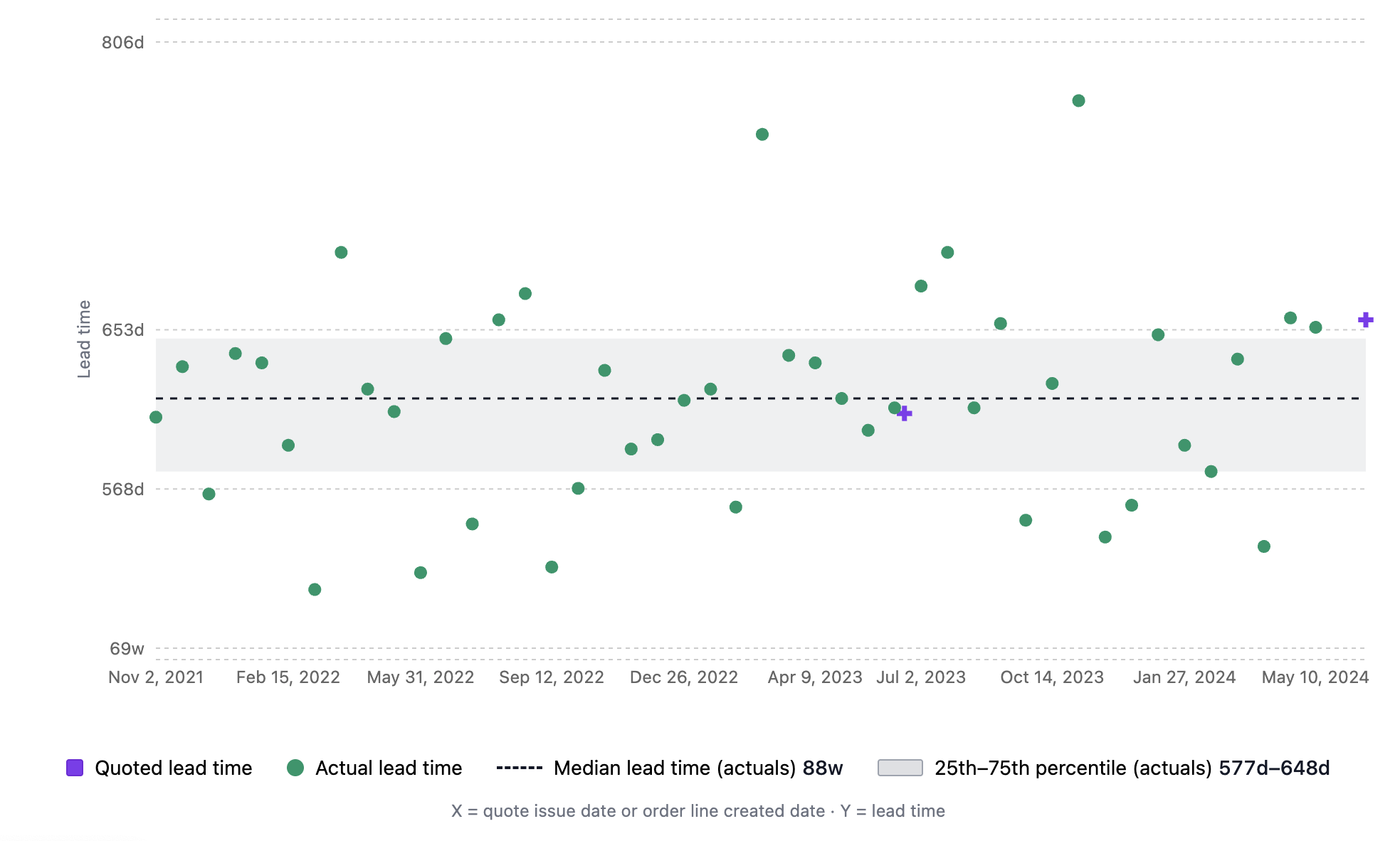
Escape Velocity. Procurement transitions from coordination to control. Three-way matching (PO, receipt, invoice) becomes non-negotiable for finance. Approved Vendor Lists (AVL) and supplier scorecards govern who you buy from. Sole-source risk and lead-time volatility become tracked metrics, not anecdotes.
Full-Rate Production. Procurement integrates with MRP for automated replenishment. BOMs are stable enough to forecast against, so demand planning finally works. Long-term supplier agreements replace transactional POs, and second sources are qualified for every critical part. Supplier development becomes its own discipline – qualifying and coaching key suppliers on capacity, quality, and cost.
Your Modern Tech Stack by Maturity Stage
A note on sequencing. MES-first, ERP-second is a viable path when building the product is the primary concern. PLM should come earlier than most teams think. Every week without revision control adds design data debt.
Best Practices That Actually Hold Up
- Speed is the only metric that matters. Missed milestones burn cash and increase the odds of a go-home event. Pick tools that get you to the next milestone faster and walk away from anything that slows you down.
- Treat ERP as a finance layer, not your Swiss Army knife. A single system to run everything sounds clean and costs a fortune to implement against a moving target. Keep ERP focused on financials and reporting, and layer best-in-class tools around it.
- Don't codify what isn't stable. Engineers ignore an MES when procedures are still being figured out at the bench. Finance teams fight an ERP whose chart of accounts was designed for a business that hasn't been built yet. Wait until the underlying process is stable enough to be worth codifying.
- Implement PLM before you think you need it. This is the one system that's hard to adopt too early. Design data debt compounds with every ECO, and wrong-revision builds get expensive fast.
- Your suppliers are your biggest schedule risk. Unlike engineering delays, you can't fix a missed PO confirmation by working harder. Ask yourself how much you'd pay to hit your next milestone six months sooner. That's what procurement tooling is actually worth.
Your Next Step
The right stack accelerates your milestones. The wrong one delays them. If procurement coordination is the friction point slowing you down, Silkline can help. Get a demo to see how engineers, finance, supply chain – and your suppliers – can work together in one place.
About Silkline
Silkline is the supply chain orchestration platform that advanced manufacturing companies use to collaborate with suppliers; track requests, RFQs, quotes, and orders; and monitor team and vendor performance. Our technology sets the standard for how OEMs engage their supply base and is the connective layer for hard tech supply chains. Hundreds of advanced manufacturers use Silkline to operate more efficiently and speed up time to revenue. The company is headquartered in Chicago, IL. For additional information, visit https://www.silkline.ai.
© 2026 Silkline, Inc. All rights reserved. Silkline and the Silkline logo are trademarks of Silkline, Inc. All other brand and product names are trademarks or registered trademarks of their respective holders.