How Arbor Energy Eliminated Procurement Bottlenecks Across Engineering, Manufacturing, and Finance
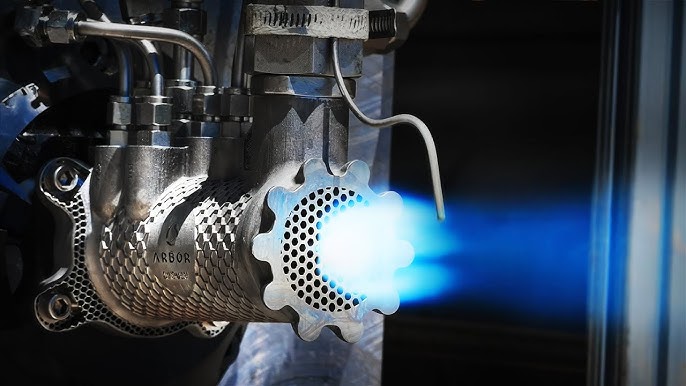
Arbor builds clean, baseload power systems for the world’s most energy-intensive industries. Manufacturing these systems means long lead times, complex supplier networks, and constant coordination across engineering, supply chain, and finance.
As Arbor grew, so did procurement volume and complexity. The company needed a system that could keep up without adding headcount or slowing down engineers.
Procurement held together by copy-paste
Arbor's procurement process was built for a small team. POs and financial data sat in QuickBooks. Approvals ran through JIRA. Nothing talked to each other, so getting parts out the door meant a lot of manual stitching.
"We worked this way through the R&D phase, copying and pasting the same information twice across systems," said Miho Beal, Head of Operations and Supply Chain at Arbor. "For a small team focused on developing the technology, it was fine. But as we moved into pilot procurement, the cracks showed. Even with work distributed informally, the process still funneled through one person, usually me, to maintain continuity."
Then the volume scaled. More engineers placing more orders. More suppliers in the mix. What worked for early R&D wouldn't work moving into production.
Integrating procurement into operations
Arbor evaluated several options, including large enterprise platforms. The verdict: too expensive, too slow to implement, and too difficult to do something as fundamental as get POs out the door.
Silkline was different. In their first meeting with the team, Arbor saw that the platform covered everything they needed, from functionality to integrations and performance, while staying flexible enough to handle what comes next as the company scales.
"We loved that Silkline had already built so much of what we needed," said Beal. "The team has clearly lived supply chain realities. You can see it in how they designed the platform."
Arbor selected Silkline to unify coordination across engineering, production, and finance, and to remove procurement as a bottleneck. The ability to integrate with systems Arbor may adopt down the road sealed the decision.

Supply chain orchestration from request to payment
Approvals, purchase orders, and supplier communication now run through one system. Procurement scales with the business rather than constraining it.
"With Silkline, all of our engineers are empowered to do their own purchasing. No one is waiting," said Beal.
Beyond eliminating friction, Arbor is now implementing three-way matching across POs, invoices, and payments, powered by Silkline's integration with Ramp.
Arbor's approach reflects a broader shift in modern hardware companies: instead of forcing everything through a single monolithic system that does many things adequately, advanced manufacturers are assembling purpose-built, integrated platforms as their operating systems, supporting faster growth and shorter cycle times.
After just a few weeks on Silkline, Arbor's team realized how much more they could do. Their current focus: supplier performance.
“As we move to faster and higher production levels, supplier reliability and pricing become even more important,” said Beal. “Silkline gives us knowledge we’ve never had about supplier performance so we can be a better advocate for our operational teams and better stewards of the business.”